I'm just one person, just two hands, just one heart. I have everything to offer.


This blog brings together resources and stories for other young caregivers and families dealing with the effects of Alzheimer's and the many OTHER forms of dementia including Dementia with Lewy Bodies, Creutzfeldt-Jakob Disease, Frontal Lobe Dementia, Huntington’s Disease , Parkinson’s Disease, Mild Cognitive Impairment, Wernicke-Korsakoff Syndrome, Mixed Dementia, Normal Pressure Hydrocephalus, Pick’s Disease and Vascular Dementia.


Monday, January 17, 2011

Researchers closer to Alzheimer's blood test

January 7, 2011

American researchers say they have made a breakthrough in the quest for a blood test for Alzheimer's disease.

Scientists from the Scripps Research Institute in the US have published research that outlines technology which detects molecules specific to Alzheimer's in a patient's blood.

Melbourne University Professor Ashley Bush says the new American technology could be useful.

"They've shown, that at least on a small scale, it can pick a big difference between Alzheimer's disease and normal people," he said.

"But we've already had several tools at our disposal that can see such differences.

"What we really need is to show whether or not it can make a prediction from a normal person before they become symptomatic with Alzheimer's disease - to be able to determine whether the change that's seen occurs early enough so that it can tell us that years down the track they're going to be developing the symptoms."

Professor Bush is also the co-director of the Australian Imaging, Biomarkerand Lifestyle Flagship Study (AIBL), which is monitoring 1,100 Australians as they age, by taking blood samples and measuring brain performance.

Professor Bush believes it is the biggest study being undertaken by any country and hopes it will lead to the development of a predictive blood test for Alzheimer's in the next five to 10 years.

He says he and his colleagues are acutely aware of the urgent need for the blood test.

"Alzheimer's disease is going to be a social climate change for us," he said.

"There are so many people coming down with the disease because of the successful ageing of the population.

"Being old is pretty common nowadays and it's only going to become more common.

"It's estimated that if things don't change, if we don't have a disease modifying treatment for Alzheimer's disease it's going to drain about 3 per cent of the country's wealth by the year 2050 when over a million people will be affected by it."

The American research is being published in today's edition of scientific journal Cell.

By Samantha Donovan

Geriatric Case Managers: A Valuable Resource for Families Caring for An Aging Relative

As a geriatric care manager, I receive inquiries from family members who are caring for a relative, and “don’t know quite why I am calling but I was told you could help me”. Or sometimes I receive calls from family members who admit to needing help but ask “What exactly do you do?”

Here is a brief description of geriatric care managers and how they might be helpful to you and your aging relative:

Who are geriatric care managers?

Typically a geriatric care manager (GCM) is a social worker, counselor, gerontologist or nurse. Many GCMs have their own private practice, and some work for an agency such as the Council on Aging, Jewish or Catholic Social Services, etc. Geriatric care managers can help caregivers and older adults, whether they live close by or a long distance away with the multitude of issues related to an older relative’s and caregiver’s personal well being.

What do Geriatric Care Managers do?

The scope of practice can vary from GCM to GCM, but generally speaking, most or all of the following services are offered.

Geriatric care managers:

LISTEN. Before a geriatric care manager knows how she can help you, it is important to hear your story: your parent’s health and situation, how you are doing and what is concerning you. During your initial, as well as on-going conversations, GCMs listen to what you have to say. They value your input. They ask questions to make sure they understand your unique situation and how they can help.

Conduct an assessment of your relative’s health, safety, capabilities and needs. In my practice, I try to conduct assessments in the older person’s home, so she can feel more relaxed and in control. A casual conversation blended with some direct questions and observations can give me a good idea of the abilities and needs of the person. An assessment can take 2 hours or more depending on the complexities of the situation.

Report the results of the assessment, including recommendations for planning for the near future and beyond. Families often use this tool to make sure everyone has the same information about what is happening, what needs to be done, and who is going to do what needs to be done.

Coordinate and oversee services that your relative is receiving. Having a professional involved who is experienced in working with community and health care providers and ‘speaks their language’, can not only be efficient but can ensure that quality services are delivered. For example, if your relative could benefit from some part time help in the home, a GCM can schedule caregivers (or companions) orient them to what is needed and then work with you to make sure the level of assistance is being given. Some GCMs employ caregivers, others do not.

Advocate for what you and your relative need with doctors and other health care providers, attorneys, bankers, and community services and residential care settings. I have several clients who live in residential care settings, a distance from their adult children. I am not only able to report how their relative is doing when I visit, but I am able to meet with the managers about any changes that need to take place to maintain my client’s health, comfort and safety.

Support the older adult and family through transitions such as bringing help in the home, attending an adult day center, or moving from home to a residential care setting. These decisions and changes can be made easier with the guidance and support of an experienced care manager.

Facilitate family meetings. When a parent’s health, memory or situation changes, family meetings can be an opportunity for families to get together to talk about the present situation and how best to help the parent or the caregiver. Family meetings can also be a time for a geriatric care manager to educate families about a disease, present and describe services that can help, and answer any questions. If a parent is reluctant to accepting help, or the family cannot come up with a plan that everyone can agree to, a non-partial facilitator can help.

Act as a resource person and make referrals to services that can help now and in the future.

Geriatric care managers are committed to ensuring that families have the best quality of life possible, given their individual situation.

How much do geriatric care charge for their services?

The fees for private geriatric care managers vary from state to state and region to region. Many GCMs have a set hourly fee; some require a deposit for services when a contract is signed. Hours are then billed at the hourly rate and deducted from the deposit. It is best to ask up-front what the billing rate is, what it includes and if a contract needs to be signed before services can be started. Keep in mind that most care managers will work with you on an ‘as-needed’ basis, for a specific length of time or as long as needed.

How do I find a geriatric care manager?

Members of the National Association of Professional Geriatric Care Managers (NAPGCM) can be found on http://www.caremanager.org/ or by calling 1-521-881-8008. Questions to ask when you interview GCMs are posted on the site. To find GCMs that are not members of the National Association, call your local Council on Aging.

By Laurie White

Thursday, January 6, 2011

National Alzheimer’s Project Act (NAPA) Becomes Law

Landmark legislation passes

The National Alzheimer's Project Act (NAPA) is the largest legislative victory in many years for the Alzheimer cause. Over the last several years, the Alzheimer's Association has been the leading voice in urging Congress and the White House to pass the National Alzheimer's Project Act (NAPA). The National Alzheimer's Project Act will create a coordinated national plan to overcome the Alzheimer crisis and will ensure the coordination and evaluation of all national efforts in Alzheimer research, clinical care, institutional, and home- and community-based programs and their outcomes. Alzheimer's advocates were instrumental in moving NAPA through Congress. More than 50,000 e-mails, nearly 10,000 phone calls and more than 1,000 meetings by the Alzheimer's Association and its advocates led us to the historic legislative victory for the Alzheimer community.

NAPA Chronology

January 4, 2011 President Obama signs NAPA into law, marking the largest legislative victory in many years for the Alzheimer cause.
Late December Alzheimer's Association advocates have sent more than 15,000 email messages to the White House asking the President to sign the National Alzheimer's Project Act into law.
December 15, 2010 Thousands of advocates flood Capitol Hill with phone calls and e-mails urging their Representatives to vote for NAPA. NAPA is passed by the House of Representatives and moves to the White House for signature.
December 9, 2010 Alzheimer's Association President and CEO Harry Johns testified before the House Committee on Energy and Commerce, Subcommittee on Health. Harry spoke about the importance of NAPA and encouraged its immediate passage.
December 8, 2010 After Alzheimer's Association advocates blanket Senate offices with phone calls and e-mails for several days, asking the Senate to pass NAPA immediately, the National Alzheimer's Project Act (S.3036) passed the Senate unanimously and moved to the House of Representatives.
December 1, 2010 After months of behind the scenes work by the Alzheimer's Association federal affairs team with champions in Congress, the Senate Committee on Health, Education, Labor, and Pensions (HELP) approved the National Alzheimer's Project Act (S. 3036).
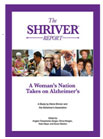
October 18, 2010 With the release of The Shriver Report: A Woman's Nation Takes on Alzheimer's Disease, repeated appeals are made for the passage of NAPA in Hill visits, Administration briefings, Washington policy briefings, and by Maria Shriver in interviews on This Week and other news programs.
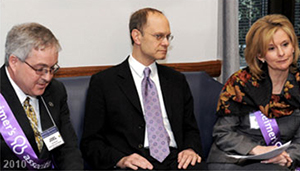
September 21, 2010 Concluding the Alzheimer's Breakthrough Ride, on World Alzheimer's Day participants cycled to Capitol Hill and presented more than 110,000 petition signatures for delivery to Congress. The petition called for passage of the National Alzheimer's Project Act and two other Alzheimer's Association priorities.

Researchers who participated in the Alzheimer's Breakthrough Ride visited Capitol Hill to meet with more than 50 Members of Congress, urging their support for NAPA.

Later that day, the Alzheimer's Association delivered a message in support of NAPA at a special White House briefing on Alzheimer's disease. Harry Johns, Alzheimer's Association President and CEO, and National Board Member Stephen Hume, Psy.D., an individual living with the disease, made presentations at the meeting, focusing on the urgent need for a coordinated national Alzheimer's strategy and for its swift implementation. See the full video of the White House meeting.
July 30, 2010 The Alzheimer's Association President and CEO Harry Johns, former National Board Public Policy Chair Bettylu Saltzman, and Public Policy Vice President Robert Egge meet again with Pete Rouse, one of President Obama's top aides, to solicit the Administration's support for NAPA and for creating a national strategy to combat Alzheimer's disease.
Summer 2010 The Alzheimer's Association's President and CEO, Harry Johns, and the federal affairs team make the rounds on Capitol Hill, meeting with members of Congress and staff to drum up support for NAPA and to plan strategy on how to enact the bill by the end of the year.
March 9, 2010 Alzheimer's Association Advocacy Forum attendees march on Capitol Hill to meet with their Members of Congress, urging their support for the National Alzheimer's Project Act.


David Hyde Pierce joins advocates from Iowa to meet with Sen. Chuck Grassley (R-Iowa).
February 2, 2010 With active collaboration and drafting support from the Alzheimer's Association, the National Alzheimer's Project Act is reintroduced by Senator Evan Bayh and Senator Susan Collins in the Senate (S.3036) and by Rep. Ed Markey and Rep. Chris Smith (H.R.4689) in the House. The Alzheimer's Association immediately endorses the reintroduced bill.
July 31, 2009 Based on the Alzheimer's Study Group recommendations and following consultations with the Alzheimer's Association, Sen. Mel Martinez introduces the first National Alzheimer's Project Act in Congress. The Alzheimer's Association immediately endorses the bill.
July 20, 2009 The Alzheimer's Association President and CEO Harry Johns, former National Board Public Policy Chair Bettylu Saltzman, and Public Policy Vice President Robert Egge meet with Pete Rouse, one of President Obama's top aides, to discuss the Alzheimer's crisis and introduce the need for a bold, coordinated national Alzheimer strategy to address it.
March 25, 2009 Alzheimer's Study Group releases its final report, A National Alzheimer's Strategic Plan: The Report of the Alzheimer's Study Group. The report calls for the creation of a National Alzheimer's Strategy and an Alzheimer's Project Office within the federal government. Harry Johns, President and CEO of the Alzheimer's Association, pledged, "You can be assured that the Alzheimer's Association will play a leading role in seeking the enactment of the core recommendations present in the ASG report."

That same day, advocates attending the 2009 Alzheimer's Association Advocacy Forum visited their Members of Congress urging support for these key Alzheimer's Study Group recommendations, the beginning of the Association's ongoing campaign to accomplish this objective in the 111th Congress.
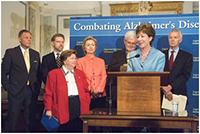
Register now to attend the 2011 Alzheimer's Association Advocacy Forum.
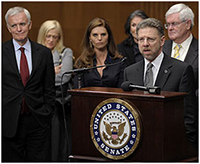
July 11, 2007 With endorsement of, and financial and in-kind support from, the Alzheimer's Association, the Alzheimer's Study Group is launched at a Capitol Hill Conference. The Alzheimer's Study Group is also endorsed at the launch event by then Alzheimer's Disease Task Force co-chairs, then-Senator Hillary Clinton and Senator Susan Collins, and Rep. Ed Markey and Rep. Chris Smith, as well as by Senator Barbara Mikulski and Senator Richard Burr.
July 2007 Speaker Newt Gingrich and Robert Egge author an article in Alzheimer's and Dementia: The Journal of the Alzheimer's Association. This article, "Developing a National Alzheimer's Strategy Equal to the Epidemic," first makes the case for the creation of a federal Alzheimer strategy.