I'm just one person, just two hands, just one heart. I have everything to offer.


This blog brings together resources and stories for other young caregivers and families dealing with the effects of Alzheimer's and the many OTHER forms of dementia including Dementia with Lewy Bodies, Creutzfeldt-Jakob Disease, Frontal Lobe Dementia, Huntington’s Disease , Parkinson’s Disease, Mild Cognitive Impairment, Wernicke-Korsakoff Syndrome, Mixed Dementia, Normal Pressure Hydrocephalus, Pick’s Disease and Vascular Dementia.


Showing posts with label elder care. Show all posts

Thursday, May 7, 2015

Reposted: Who Am I Now That She’s Gone

From one of my best friends, and one of the strongest women I know, Kathy Ritchie www.MyDementedMom.com

There are a lot of similarities between a small child and someone living with dementia. Specifically, frontotemporal degeneration. I remember so many of my mom’s odd quirks. Once, she poured her Coke into her glass of red wine. She drank it, much to my dismay. My toddler did something similar recently. She poured water into a bowl of hard boiled eggs then she mixed it around and ate it. I immediately thought of my mom. I can’t remember if I laughed or felt sad. Her disease caused her to mentally and emotionally regress… a real life Benjamin Button. I always thought having a young child would be, in some ways, easier than having a mother with dementia. In some ways it is: there’s so much more joy, more laughter, fewer tears. My toddler is also considerably lighter than my mother, and when she is upset or angry, I can actually pick her up and hold her… or relocate her. Something I wasn’t exactly able to do with mom (remember those times with her priest?). Lately though, I have been missing my mom; missing something about her… I can’t quite put my finger on the what. Maybe just her presence. Her scent…. I don’t know. I lost my mom, really, when I was in my 20s… I became the parent and she became the child. Before that, I was living in another city thousands of miles from home. I feel guilty about that. Maybe if I had stayed in Arizona, maybe I would have had more of those moments… precious moments that would have stuck with me, helped shape me into someone better that who I became. Instead, my memories are blurry… sometimes I’ll hear something or get a whiff of something and it’ll transport me to a particular time or place… but they’re few and far between. And sometimes I’ll dream about her. Those are the sweetest nights. I wish she came to me more often.

And then there are times when I can’t feel her at all. The loneliness is palpable.

I thought I would be relieved when my mom died. I was in most ways. I was glad she was no longer suffering in a broken down body. I was glad to put that chapter behind me and focus on my baby. I thought the hurt would fade away, too. Time does some neat tricks when it wants to, and frankly, I lost my mom a long time ago. But what I’m learning is that this kind of loss sticks with you. I know it has changed me. And I don’t know if it’s for the better. The final years were incredibly brutal and how one recovers from such a trauma is beyond me. To wallow in it would be selfish and indulgent, though there are days where I wish I could stew in it. So I try to keep going. I hate when things become stagnant. When that happens I desperately seek change. Is this blog, is the work that I do to share our story stagnant? I mean what else is there to say? Is it — this — the anchor holding me down or the means to truly let go. I have no idea what any of it means or if it means anything at all. I guess the truth is I don’t know who I am anymore now that she is gone.

That’s a little lonely, too.

Sunday, March 10, 2013

We’re Young, We’re Poor, & We Need a Cure. Our Lives Depend on It


By my friend and fellow young advocate, Kathy Ritchie
As I write this blog, I’m trolling Twitter. Just seeing what’s out there in the way of caregiver support, resources, news, etc, etc, etc. Turns out, there’s a lot shaking in our world. A quick scroll on my feed shows Tweets about everything from incontinence and nursing homes to tips on how to be an organized caregiver (“organized” and “caregiver:” two words that don’t really go together). Lots of information. Some of it useful; most of it scary.
(No, you don’t and won’t have enough money to grow old).
While you’ll absolutely find information about caregiving or being a caregiver, much of what’s out there is geared towards Baby Boomers… because let’s face it, Baby Boomers are a hot commodity right now.
Why? They’re rich and they’re going to get sick.
As for the under 40 set, well, we’re sort of preoccupied with paying off our student loans, buying our first home (or drowning in it, as the case may be), finding our dream job, finding Mr. or Ms. Right, making babies, having babies and/or getting divorced.
You know what else we’re doing? We’re NOT saving. Saving for the day we develop a long term illness like dementia.
That said, we’re about as undesirable as they come. And you should be pissed off about that. After all, we’re not safe from Alzheimer’s disease or other dementias… there are no cures, no means of prevention. NADA.
Still not convinced? Just Google, “Alzheimer’s and 2050.”
This is the quiet before the Tsunami.
Here are a few things you should know:
  • Alzheimer’s disease is just one of several types of dementias (my mom has frontotemporal dementia).
  • HIV/AIDS was once considered a death sentence; today it’s a “manageable disease.” That’s because a lot of money was thrown into the research bucket and antiviral drugs were developed.
  • Medicare will NOT pay for nursing home/assisted living care.
  • You can’t afford to grow old. According to Genworth’s 2012 Cost of Care Survey, which I found in an online article on Next Avenue,  “one year of long-term care ranges from $39,600 for an assisted living facility to $81,030 for a private room in a nursing home.” (source: Next Avenue; Genworth)
  • Alzheimer’s disease is the sixth-leading cause of death in the U.S. and the only cause of death among the top 10 in the United States that cannot be prevented, cured or even slowed. (source: 2012 Alzheimer’s Association, Facts & Figures report)
  • Have you ever changed an adult’s diaper? More than 15 million Americans provide unpaid care valued at $210 billion for persons with Alzheimer’s and other dementias.  (source: 2012 Alzheimer’s Association, Facts & Figures report)
  • In 2012, the direct costs of caring for those with Alzheimer’s or other dementias to American society will total an estimated $200 billion, including $140 billion in costs to Medicare and Medicaid. Unless something is done, the care costs of Alzheimer’s and other dementias will soar from $200 billion to a projected $1.1 trillion (in today’s dollars) by 2050.  (source: 2012 Alzheimer’s Association, Facts & Figures report)
What can you (reasonably) do?
Here’s the myth: Alzheimer’s disease and other dementias are diseases old people get. Here’s the truth: People in their 30s, 40s and 50s are developing dementia. Here’s the other truth: This disease will touch your life one day, if it hasn’t already.
Dementia is not an old person’s disease.

Monday, February 4, 2013

Giving Alzheimer’s Patients Their Way, Even Chocolate

Todd Heisler/The New York Times

PHOENIX — Margaret Nance was, to put it mildly, a difficult case. Agitated, combative, often reluctant to eat, she would hit staff members and fellow residents at nursing homes, several of which kicked her out. But when Beatitudes nursing home agreed to an urgent plea to accept her, all that changed.

Disregarding typical nursing-home rules, Beatitudes allowed Ms. Nance, 96 and afflicted with Alzheimer’s, to sleep, be bathed and dine whenever she wanted, even at 2 a.m. She could eat anything, too, no matter how unhealthy, including unlimited chocolate. 

And she was given a baby doll, a move that seemed so jarring that a supervisor initially objected until she saw how calm Ms. Nance became when she rocked, caressed and fed her “baby,” often agreeing to eat herself after the doll “ate” several spoonfuls. 

Dementia patients at Beatitudes are allowed practically anything that brings comfort, even an alcoholic “nip at night,” said Tena Alonzo, director of research. “Whatever your vice is, we’re your folks,” she said. 

Once, Ms. Alonzo said: “The state tried to cite us for having chocolate on the nursing chart. They were like, ‘It’s not a medication.’ Yes, it is. It’s better than Xanax.”
It is an unusual posture for a nursing home, but Beatitudes is actually following some of the latest science. Research suggests that creating positive emotional experiences for Alzheimer’s patients diminishes distress and behavior problems. 

In fact, science is weighing in on many aspects of taking care of dementia patients, applying evidence-based research to what used to be considered subjective and ad hoc. 

With virtually no effective medical treatment for Alzheimer’s yet, most dementia therapy is the caregiving performed by families and nursing homes. Some 11 million people care for Alzheimer’s-afflicted relatives at home. In nursing homes, two-thirds of residents have some dementia.
Caregiving is considered so crucial that several federal and state agencies, including the Department of Veterans Affairs, are adopting research-tested programs to support and train caregivers. This month, the Senate Special Committee on Aging held a forum about Alzheimer’s caregiving. 

“There’s actually better evidence and more significant results in caregiver interventions than there is in anything to treat this disease so far,” said Lisa P. Gwyther, education director for the Bryan Alzheimer’s Disease Research Center at Duke University. 

The National Institute on Aging and the Administration on Aging are now financing caregiving studies on “things that just kind of make the life of an Alzheimer’s patient and his or her caregiver less burdensome,” said Sidney M. Stahl, chief of the Individual Behavioral Processes branch of the Institute on Aging. “At least initially, these seem to be good nonpharmacological techniques.”
Techniques include using food, scheduling, art, music and exercise to generate positive emotions; engaging patients in activities that salvage fragments of their skills; and helping caregivers be more accepting and competent. 

Changing the Mood
Some efforts involve stopping anti-anxiety or antipsychotic drugs, used to quell hallucinations or aggression, but potentially harmful to dementia patients, who can be especially sensitive to side effects. Instead, some experts recommend primarily giving drugs for pain or depression, addressing what might be making patients unhappy. 

Others recommend making cosmetic changes to rooms and buildings to affect behavior or mood.
A study in The Journal of the American Medical Association found that brightening lights in dementia facilities decreased depression, cognitive deterioration and loss of functional abilities. Increased light bolsters circadian rhythms and helps patients see better so they can be more active, said Elizabeth C. Brawley, a dementia care design expert not involved in the study, adding, “If I could change one thing in these places it would be the lighting.” 

Several German nursing homes have fake bus stops outside to keep patients from wandering; they wait for nonexistent buses until they forget where they wanted to go, or agree to come inside.
And Beatitudes installed a rectangle of black carpet in front of the dementia unit’s fourth-floor elevators because residents appear to interpret it as a cliff or hole, no longer darting into elevators and wandering away. 

“They’ll walk right along the edge but don’t want to step in the black,” said Ms. Alonzo, who finds it less unsettling than methods some facilities use, bracelets that trigger alarms when residents exit. “People with dementia have visual-spatial problems. We’ve actually had some people so wary of it that when we have to get them on the elevator to take them somewhere, we put down a white towel or something to cover it up.” 

When elevator doors open, Beatitudes staff members stand casually in front, distracting residents with “over-the-top” hellos, she said: “We look like Cheshire cats,” but “who’s going to want to get on the elevator when here’s this lovely smiling person greeting you? It gets through to the emotional brain.” 

Six minutes later, participants had trouble recalling the clips. But 30 minutes later, emotion evaluations showed they still felt sad or happy, often more than participants with normal memories. The more memory-impaired patients retained stronger emotions. 

Justin Feinstein, the lead author, an advanced neuropsychology doctoral student, said the results, being studied with Alzheimer’s patients at Iowa and Harvard, suggest behavioral problems could stem from sadness or anxiety that patients cannot explain. 

“Because you don’t have a memory, there’s this general free-floating state of distress and you can’t really figure out why,” Mr. Feinstein said. Similarly, happy emotions, even from socializing with patients, “could linger well beyond the memories that actually caused them.” 

One program for dementia patients cared for by relatives at home creates specific activities related to something they once enjoyed: arranging flowers, filling photo albums, snapping beans. 

“A gentleman who loved fishing could still set up a tackle box, so we gave him a plastic tackle box” to set up every day, said the program’s developer, Laura N. Gitlin, a sociologist at Thomas Jefferson University in Philadelphia and newly appointed director of a new center on aging at Johns Hopkins University. 

After four months, patients seemed happier and more active, and showed fewer behavior problems, especially repetitive questioning and shadowing, following caregivers around. And that gave caregivers breaks, important because studies suggest that “what’s good for the caregiver is good for the patient,” Professor Gwyther said. 

Aiding the Caregiver
In fact, reducing caregiver stress is considered significant enough in dementia care that federal and state health agencies are adopting programs giving caregivers education and emotional support.
One, led by Mary S. Mittelman, a New York University dementia expert, found that when people who cared for demented spouses were given six counseling sessions as well as counselors whom they could call in a crisis, it helped them handle caregiving better and delayed by 18 months placing patients in nursing homes. 

“The patient did not have fewer symptoms,” Dr. Mittelman said. “It was the caregiver’s reaction that changed.” 

The Veterans Affairs Department is adopting another program, Resources for Enhancing Alzheimer’s Caregiver Health, providing 12 counseling sessions and 5 telephone support group sessions. Studies showed that these measures reduced hospital visits and helped family caregivers manage dementia behaviors. 

“Investing in caregiver services and support is very worthwhile,” saving money and letting patients remain home, said Deborah Amdur, chief consultant for care management and social work at the Veterans Affairs Department. 

Beatitudes, which takes about 30 moderate to severe dementia sufferers, introduced its program 12 years ago, focusing on individualized care. 

“In the old days,” Ms. Alonzo said, “we would find out more about somebody from their obituary than we did when they were alive.” 

The dementia floor was named Vermillion Cliffs, after colorfully layered rock formations formed by centuries of erosion, implying that, “although weathered, although tested by dementia, people are beautiful” and “have certain strengths,” said Peggy Mullan, the president of Beatitudes.
The facility itself is institutional-looking, dowdy and “extremely outdated,” Ms. Mullan said.
“It’s ugly,” said Jan Dougherty, director of family and community services at Banner Alzheimer’s Institute in Phoenix. But “they’re probably doing some of the best work” and “virtually have no sundowning,” she said, referring to agitated, delusional behavior common with Alzheimer’s, especially during afternoon and evening. 

Beatitudes eliminated anything potentially considered restraining, from deep-seated wheelchairs that hinder standing up to bedrails (some beds are lowered and protected by mats). It drastically reduced antipsychotics and medications considered primarily for “staff convenience,” focusing on relieving pain, Ms. Alonzo said. 

It encouraged keeping residents out of diapers if possible, taking them to the toilet to preserve feelings of independence. Some staff members resisted, Ms. Alonzo said, but now “like it because it saves time” and difficult diaper changes. 

Family members like Nancy Mendelsohn, whose mother, Rose Taran, was kicked out of facilities for screaming and calling 911, appreciate it. “The last place just put her in diapers, and she was not incontinent at all,” Ms. Mendelsohn said. 

Ms. Alonzo declined to pay workers more to adopt the additional skills or night work, saying, “We want people to work here because it’s your bag.” 

Finding Favorite Things
For behavior management, Beatitudes plumbs residents’ biographies, soothing one woman, Ruth Ann Clapper, by dabbing on White Shoulders perfume, which her biographical survey indicated she had worn before becoming ill. Food became available constantly, a canny move, Ms. Dougherty said, because people with dementia might be “too distracted” to eat during group mealtimes, and later “be acting out when what they actually need is food.” 

Realizing that nutritious, low-salt, low-fat, doctor-recommended foods might actually discourage people from eating, Ms. Alonzo began carrying chocolate in her pocket. “For God’s sake,” Ms. Mullan said, “if you like bacon, you can have bacon here.” 

Comforting food improves behavior and mood because it “sends messages they can still understand: ‘it feels good, therefore I must be in a place where I’m loved,’ ” Ms. Dougherty said.
Now, when Maribeth Gallagher, dementia program director for Hospice of the Valley, which collaborates in running Beatitudes's program, learns someone’s favorite foods, “I’m going to pop that on your tongue, and you’re going to go ‘yum,’ ” she said. “Isn’t that better than an injection?”
Beatitudes also changed activity programming. Instead of group events like bingo, in which few residents could actually participate, staff members, including housekeepers, conduct one-on-one activities: block-building, coloring, simply conversing. State regulators initially objected, saying, “Where’s your big group, and what you’re doing isn’t right and doesn’t follow regulations,” Ms. Alonzo said. 

Ms. Mullan said, “I don’t think we ever got cited, but it was a huge fight to make sure we didn’t.”
These days, hundreds of Arizona physicians, medical students, and staff members at other nursing homes have received Beatitudes’ training, and several Illinois nursing homes are adopting it. The program, which received an award from an industry association, the American Association of Homes and Services for the Aging, also appears to save money. 

Arlene Washington’s family moved her to Beatitudes recently, pulling her from another nursing home because of what they considered inattentive and “improper care,” said her husband, William. Mrs. Washington, 86, was heavily medicated, tube fed and unable to communicate, “like she had no life in her,” said Sharon Hibbert, a friend. 

At Beatitudes, Dr. Gillian Hamilton, administrative medical director, said she found Mrs. Washington “very sedated,” took her off antipsychotics, then gradually stopped using the feeding tube. Now Mrs. Washington eats so well she no longer needs the insulin she was receiving. During a recent visit, she was alert, even singing a hymn. 

That afternoon, Ms. Nance, in her wheelchair, happily held her baby doll, which she named Benjamin, and commented about raising her sons decades ago. 

Ms. Alonzo had at first considered the doll an “undignified” and demeaning security blanket. But Ms. Gallagher explained that “for a lot of people who are parents, what gives them joy is caring for children.” 

“I was able,” Ms. Gallagher said, “to find Margaret’s strength.” 

Ms. Gallagher said she learned when approaching Ms. Nance to “look at her baby doll, and once I connect with the doll, I can look at her.” 

She squatted down, complimented Benjamin’s shoes, and said, “You’re the best mom I know.”
Ms. Nance nodded earnestly. 

“It’s good to know,” Ms. Nance said, “that somebody knows that you care.”


Friday, June 22, 2012

Loneliness Bodes Poorly For A Healthy Old Age


They're time-consuming, demanding and require birthday cards, but they may help keep you alive. Friends and family, that is.

Loneliness in older people can predict declines in health and an increased risk of death, according to findings just published online by the Archives of Internal Medicine. People over 60 who felt lonely had a 45 percent higher risk of death than those who weren't lonely, the six-year-long study found. In absolute terms, the risk of death was about 23 percent for the lonely people and 14 percent for those who weren't.


The lonely people in the study were also more prone to have limited mobility and face greater difficulty performing basic tasks like grooming and housekeeping. On that score, about a quarter of lonely people were likely to develop trouble compared to about 13 percent who weren't lonely.

While the connection between well-being and friendships isn't new, the latest findings look specifically at people who self-identified as lonely, regardless of the how extensive their social network was.
"It's about connectivity," lead researcher Carla M. Perissinotto tells Shots. "Someone can have multiple social contacts but still somehow felt that they're not connecting." Many people who said they were lonely, for example, were married or lived with someone else.

Perissinotto, a geriatrician, cited one of her patients, a 93-year-old woman who had difficulty eating. The woman kept losing weight because she lived alone and viewed eating as a social activity. To treat her, Perissinotto looked for ways to help the woman be with peers during mealtimes.

The data, which were collected every two years from 2002 through 2008 as part of the nationally administered Health and Retirement Study, looked at 1,604 cases to assess risk factors. The study only included people living in the community — not those in care facilities or retirement homes.
By asking about patient's feelings, Perissinotto says she hopes physicians can broaden their understanding of potential health risks and think creatively about addressing them. She says the study can't conclusively prove cause and effect, but sheds light on a significant health issue.

"We could be missing a big part of the puzzle if we choose to focus on traditional medical risk factors," Perissinotto says. "By asking these questions, I may be finding one more way of intervening with these patients."

An accompanying editorial notes that some of the predictive factors found in this study and some others published at the same time should get more attention. "Loneliness is a negative feeling that would be worth addressing even if the condition had no health implications," the authors of the editorial note.
Copyright 2012 National Public Radio. To see more, visit http://www.npr.org/.

Friday, May 25, 2012

A New Attack on Alzheimer’s

The Obama administration has announced a bold research program to test whether a drug can prevent the onset of Alzheimer’s disease well before any symptoms appear. It is a long shot, but the payoff could be huge.

The prevailing, but not universally accepted, hypothesis is that amyloid plaques in the brain play a major role in causing Alzheimer’s. Crenezumab attacks the formation of such plaques, apparently by binding to amyloid proteins and clearing them from the brain. If the drug fails to work, the trial will probably demolish the amyloid hypothesis and set researchers scrambling to find other targets to attack.
Currently, there is no cure for Alzheimer’s, which steadily robs patients of their memory, followed by full-blown dementia. There is also no diagnostic test to identify who has it, and no treatment to slow patients’ deterioration for more than a few months. 
 
While work continues on those fronts, the new clinical trial will test whether the drug, Crenezumab, made by Genentech, can prevent the disease in a group of people whose genetic heritage guarantees that they will develop it. If the drug successfully prevents the loss of mental capacities as measured by a sensitive new cognitive test there is hope — but no guarantee — that it could do the same for members of the general public. As Pam Belluck described in The Times last week, the trial will focus on members of an extended family in Colombia who carry a rare genetic mutation that causes them to develop Alzheimer’s early in life. They typically experience cognitive impairment at about age 45 and dementia by 51. The trial will also include a smaller number of individuals in the United States with the same genetic mutation. 

Instead of recruiting thousands of volunteers and following them for an extended period as in a customary prevention trial, the researchers in Colombia will give the drug to only 100 people with the early-onset genetic mutation. They will give placebos to another 100 people with the mutation and to 100 family members who do not carry the deadly gene. 

The study will cost more than $100 million and is being financed mostly by Genentech, buttressed by $16 million from the National Institutes of Health and $15 million raised by the Banner Alzheimer’s Institute in Phoenix, which is leading the study. 


A prevention trial of a different drug that was also intended to slow formation of amyloid plaques actually made patients’ symptoms worse, possibly because it interfered with various other proteins needed by the brain. Researchers believe that Crenezumab will be safer and more effective, but again there are no guarantees. The risk is justified given that without the treatment the recipients will inevitably get Alzheimer’s in the prime of their lives. The truly big payoff will come if the drug succeeds in this group and lays the groundwork for preventing or slowing the progress of Alzheimer’s that appears late in life. The researchers will be gathering data on a variety of biomarkers — glucose activity in the brain, shrinkage of the brain, certain proteins in cerebral spinal fluid, for example — to see which if any are related to preventing amyloid plaques and the loss of mental abilities. 

If the drug prevents the deterioration of particular biomarkers and ultimately sustains mental capacity, then the same markers might be useful in identifying and treating older people likely to develop the disease. And federal regulators might be willing to approve other prevention drugs based on their short-term effects on biomarkers, speeding the conduct of clinical trials. 

More than five million Americans currently have Alzheimer’s. Without an effective preventive, the number will rise steadily as the population ages. 

Published: May 20, 2012  by NY Times, Editorial

New Drug Trial Seeks to Stop Alzheimer’s Before It Starts

Brain scans of a member of a Colombian family who has Alzheimer's
In a clinical trial that could lead to treatments that prevent Alzheimer’s, people who are genetically guaranteed to develop the disease — but who do not yet have any symptoms — will for the first time be given a drug intended to stop it, federal officials announced Tuesday.

Experts say the study will be one of the few ever conducted to test prevention treatments for any genetically predestined disease. For Alzheimer’s, the trial is unprecedented, “the first to focus on people who are cognitively normal but at very high risk for Alzheimer’s disease,” said Dr. Francis S. Collins, director of the National Institutes of Health. 

Most participants will come from the world’s largest family to experience Alzheimer’s, an extended clan of 5,000 people who live in Medellín, Colombia, and remote mountain villages outside that city. Family members with a specific genetic mutation begin showing cognitive impairment around age 45, and full dementia around age 51, debilitated in their prime working years as their memories fade and the disease quickly assaults their ability to move, eat, speak and communicate. 

Three hundred family members will participate in the initial trial. Those with the mutation will be years away from symptoms, some as young as 30. 

“Because of this study, we do not feel as alone,” said Gladys Betancur, 39, a family member. Her mother died of Alzheimer’s, three of her siblings already have symptoms, and she had a hysterectomy because of her fears that she has the mutation and would pass it on to her children. “Sometimes we think that life is ending, but now we feel that people are trying to help us.” 

The $100 million study will last five years, but sophisticated tests may indicate in two years whether the drug helps delay memory decline or brain changes, said Dr. Eric M. Reiman, executive director of the Banner Alzheimer’s Institute in Phoenix and a study leader. 

Alzheimer’s experts not involved in the study said that though only a small percentage of people with Alzheimer’s have the genetic early-onset form that affects the Colombian family, the trial was expected to yield information that could apply to millions of people worldwide who will develop more conventional Alzheimer’s. 

“It offers a tremendous opportunity for us to answer a large number of questions, while at the same time offering these people some significant clinical help that otherwise they never would have had,” said Dr. Steven T. DeKosky, an Alzheimer’s researcher who is vice president and dean of the University of Virginia School of Medicine. Dr. DeKosky was part of a large group consulted early on, but is not involved in the study. 

Some 5.4 million Americans have Alzheimer’s, and the numbers are expected to swell as the baby boom generation ages. Dr. Reiman’s team is planning a similar trial for people in the United States considered at increased risk for conventional late-onset Alzheimer’s. The study announced Tuesday will include a small number of Americans with gene mutations guaranteed to cause early-onset Alzheimer’s. 

The drug trial is part of the federal government’s first national plan to address Alzheimer’s, which was unveiled Tuesday by Kathleen Sebelius, the secretary for health and human services. The government took the unusual step of assigning $50 million from the current year’s N.I.H. budget to research considered too promising to wait, including the Colombia trial and a study on whether inhaled insulin can ease mild cognitive impairment, Dr. Collins said. Another $100 million is proposed for 2013, mostly for research, but also for education, caregiver support and data collection. 

Success for the Colombia trial is, of course, no sure thing. Many trials fail, and Alzheimer’s research has so far found no treatment effective for more than several months. But experts say that trying drugs years before symptoms emerge could have greater potential because the brain would not yet be ravaged by the disease. The trial will be financed with $16 million from the National Institutes of Health, $15 million from private donors through the Banner Institute and about $65 million from Genentech, the drug’s American manufacturer. 

The drug, Crenezumab, attacks amyloid plaques in the brain. If it can forestall memory or cognitive problems, scientists will know that prevention or delay is possible and appears to lie in targeting amyloid years before dementia develops. Many, but not all, Alzheimer’s researchers believe amyloid is an underlying cause of Alzheimer’s. 

In 2010, The New York Times reported on the pervasiveness of dementia in this large Colombian family and scientists’ hopes of testing prevention drugs. But persuading pharmaceutical companies to invest took months. There are scientific and ethical issues involved with giving drugs to people who are healthy and people who live in a developing country, some of whom have little education, paltry incomes and longstanding superstitions about the disease they call La Bobera — the foolishness.
“The first thing I did was to ask myself the question, Are we taking advantage of these folks?” said Richard H. Scheller, Genentech’s executive vice president of research and early development. “The answer was clearly no.” 

The risks, he said, are balanced by the fact that if nothing is done, “they’re going to get this terrible, terrible disease for sure.” 

The few trials of prevention therapies — involving ginkgo biloba, women’s hormone replacement treatment and anti-inflammatory drugs — have involved people not guaranteed to get the disease. These therapies either failed or caused adverse side effects. 

Testing drugs on that kind of population takes “too many healthy volunteers, too much money, and too many years,” Dr. Reiman said. 

The Colombian population is ideal because it is large enough to provide solid results, and it is easy to identify whom the disease will strike and when. 

Crenezumab was chosen for the Colombia trial partly because it appears to have no negative side effects, unlike other drugs designed to clear amyloid from the brain, said Dr. Francisco Lopera, a Colombian neurologist who has worked with the family for decades and is a leader of the study. Other anti-amyloid treatments have caused edema in the blood vessels, an imbalance of fluid that can have serious consequences. 

Crenezumab is currently being given in two clinical trials to people with mild to moderate symptoms of dementia in the United States, Canada and Western Europe to see if it can help reduce cognitive decline or amyloid accumulation, according to Genentech. 

In the Colombia study, expected to start early next year, 100 family members with the mutation will receive the drug every two weeks in an injection at a hospital. Another 100 carriers will receive a placebo. And because many people do not want to know if they have the mutation, researchers will include 100 noncarriers in the study; they will receive a placebo. 

Researchers have developed a sophisticated battery of five memory and cognitive tests that have been shown in other studies to detect subtle alterations in recall and thinking ability that usually go unnoticed. Dr. Pierre N. Tariot, director of the Banner Institute and a leader of the study, said the measurements would involve recalling words, naming objects, nonverbal reasoning, remembering time and place, and drawing tests involving copying complex figures. 

Dr. Tariot said researchers would also assess changes in people’s emotional state, “irritability, sadness, crying, anxiety, impulsivity — these are cardinal features of the disease as it emerges.”
The scientists will take physiological measurements, including PET scans that measure amyloid and how glucose is metabolized in the brain, M.R.I. scans that measure whether the brain is shrinking, and cerebral spinal fluid tests that measure amyloid and tau, a protein in dying brain cells. 

If any of these indicators are improved by the drug, Dr. Reiman said, scientists may then be able to treat one of these early physiological changes, just as high blood pressure and cholesterol are treated to prevent heart disease. 

In Medellín, Marcela Agudelo, 17, has Alzheimer’s on both sides of her family because her parents are distant cousins. Marcela watched her maternal grandmother die, and her father, 55, once a vibrant livestock trader, has deteriorated so much that he can no longer walk, talk or laugh. 

With the research, “we have more hope for a cure,” Marcela said, “or at least a better life.” 

Dabrali Jimenez contributed reporting.

Tuesday, May 8, 2012

Early Burdens: Eldercare Falls on Young Shoulders

PHOTO: Suzette Armijo, 30, of Phoenix, right, oversees care of her 86-year-old grandmother, Elizabeth Armijo, left, a retired National Park Service ranger.
Suzette Armijo, 30, of Phoenix, right, oversees care of her 86-year-old grandmother, Elizabeth Armijo, left, a retired National Park Service ranger. (Courtesy Suzette Armijo)
At 30, Suzette Armijo cares for her widowed 86-year-old grandmother, a retired National Park Service ranger in the final stages of Alzheimer's disease, while holding down a fulltime job, a part-time job and raising a 4-year-old son.

"This was nothing that I had planned for," says Armijo, who moved her grandmother Elizabeth Armijo into a nearby six-bed assisted living home because veterans' benefits "wouldn't pay for her to live with me." Still, she says, "I have to do everything for her, aside from her bathing. There's always something new going on with her medically."

Besides her fulltime marketing job with a Phoenix retirement community, Armijo supplements her income with outside consulting because "I do have to pay a portion of Grandma's bills."
 
Although she doesn't know anyone else her age doing what she's doing, she comes to her caregiving out of love for a woman who took care of so many others: "I don't feel torn because I know this is the way my Grandma was," Armijo said Thursday. "She took care of her parents. She took care of my grandfather. She took care of my little brother who had cancer when he was little. I grew up seeing that."

Suzette Armijo is among a generation of young adult caregivers, the majority of whom are women, navigating tough turf without a roadmap. Few of their contemporaries shoulder equivalent responsibilities. Members of the so-called sandwich generation, squeezed by parental caregiving and child-rearing, are a good 20 to 30 years older. As they try to tap into resources to help an ailing grandmother, Mom or Dad, these 20-somethings and 30-somethings are often on a lonely road. Armijo said she's drawn some of her strength from establishing a local young advocates group through the Alzheimer's Association. "You have to find something for yourself, otherwise you lose your mind."

Internet sites like AgingCare.com, which connects caregivers of elderly parents with others, may help this younger caregiving cadre find encouragement, empathy and tips on locating services.

"Other caregivers jump in and help," said Richard Nix, AgingCare.com's 49-year-old executive vice president. The National Stroke Association has launched a free, private Careliving Community with "more than 2,000 caregivers right now," said Taryn Fort, a spokeswoman for the Centennial, Colo.-based organization. Support groups for young caregivers have sprouted within some local chapters of the Alzheimer's Association, said Toni Williams, a spokeswoman for its public policy office in Washington, D.C.
Even the best-laid plans among 20-somethings can be thrown off course by a loved one's catastrophic illness and disability. After graduating from Purdue University in Indiana last May, Lauren Erickson spent six weeks in a competitive pre-medical enrichment program in Cincinnati. In September, she moved to Minneapolis to begin work as a hematology-oncology clinic assistant at Children's Hospitals and Clinics of Minnesota while studying for the Medical College Admission Test, which she hoped to take May 12.


Lauren Erickson, 23, left, moved back home to Prescott, Wis., from Minneapolis, to help care for her dad Jim Erickson, 71, right, following his stroke in March.
 
But on St. Patrick's Day, her father Jim Erickson, 71, suffered a massive stroke at home in Prescott, Wis., which left him unable to speak or move his right side. Because Erickson's mother, 61, was still recuperating from a Feb. 2 hip replacement, the couple's only child stepped in.

"I had to move home and help my Mom," Erickson, 23, said. As a result of new demands on her time, including a significant daily commute to Minneapolis, "I haven't opened an MCAT book or anything," Erickson said. She signed up to take the MCAT in July, but said her taking the test then will depend upon how her father is faring.

Even with a "very helpful" boyfriend and some free counseling through work, Erickson keeps wishing she could do more for her mother. "Through this whole process, I couldn't really break down or cry in front of her. I had to be the strong one." Still, she feels more rushed than ever about achieving her many life goals, including med school admission, "so that I can have my Dad present for all those events."
Having her father David Jenkins nearby was the only solution that Tara Leigh Adams, 28, found acceptable after he suffered a major stroke in November 2010. Adams, married and teaching second grade in Greenville, S.C., raced to her hometown of Charlottesville, Va., to help her 65-year-old father, a widower since Adams was a child.


Tara Leigh Adams, 28, right, a wife, expectant mother and second-grade teacher, moved her father David Jenkins, 65, seated, from Virginia.
 
"I think from the start I kind of, in my heart, knew that was just the way. I always knew he had to be near me," said Adams, who is expecting her first child in October. Aides help her father while she's at work, but once she walks back in the front door, she takes over everything, including getting him to the restroom.
Friends just don't understand, she said. "A lot of people my age look and say 'why do you do this? Why not a nursing home?'"

But for Adams, "there's no other option for me that would ever be as good."

Adams, who calls her husband the "rock that I lean on" said there is no substitute for "waking up and telling my Dad how much I love him in the morning."

Sunday, May 1, 2011

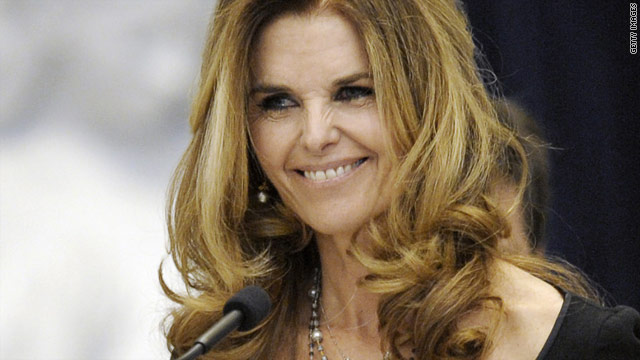
Shriver: A woman's nation takes on Alzheimer's

(CNN) -- Maria Shriver's father, Sargent Shriver, died from Alzheimer's in January after being diagnosed in 2003. In her first public remarks about her father since his death, Shriver spoke to Larry King about his battle with the disease, her thoughts on Alzheimer's research and why the disease is especially hard on women. Her interview can be seen in its entirety on Sunday, May 1 at 8 p.m. ET on "A Larry King Special, Unthinkable: The Alzheimer's Epidemic."

After her father's diagnosis, Shriver became a vocal advocate for Alzheimer's patients, families and caretakers. She partnered with the Alzheimer's Association to publish a groundbreaking study called "Alzheimer's in America: The Shriver Report on Women and Alzheimer's," which was just released in paperback.

The Shriver report looked at Alzheimer's as a women's disease from the point of view of the patient, the family and the caregivers. Below is an excerpt of a letter introducing "The Shriver Report:"
"I'm Maria Shriver, and I'm a child of Alzheimer's."
That's how I introduced myself last year when I testified before the Senate Special Committee on Aging. I was there to support the Alzheimer's Study Group, a blue-ribbon panel Congress had charged, at the request of the Alzheimer's Association, with designing an action plan to deal with Alzheimer's disease.
Alzheimer's is an epidemic. Every minute or so -- in fact, before you get to the end of this page -- someone in this country will develop Alzheimer's. Millions of people already have been formally diagnosed. Millions more are undiagnosed -- or diagnosed with some form of dementia that could actually be Alzheimer's. And with the 78 million baby boomers now moving into their later years, the cost of Alzheimer's to American society is expected to be $20 trillion between now and the year 2050. That's right -- $20 trillion.
There's no doubt about it. We are in the midst of a national emergency, and we're woefully unprepared.
So there I was in that packed hearing room, sitting with Alzheimer's Study Group members -- former House Speaker Newt Gingrich, former Sen. Bob Kerrey, former Supreme Court Justice Sandra Day O'Connor (who left the High Court to care for her husband with Alzheimer's) and Larry Butcher, chairman of Alzheimer's Community Care in Florida (who would lose his wife months later to younger onset Alzheimer's). We were all there to ask this powerful congressional committee to listen up, pay attention, increase funding and take on Alzheimer's.

I must admit it was something of a surreal experience for me, because the truth is, for so many years it was my father, Sargent Shriver, who would be sitting in that chair, pleading with senators to listen up, pay attention and increase funding. My dad was the one who would go up to the Hill to testify for his beloved Peace Corps and for all the War On Poverty programs he started and fought for, including Head Start, Vista, Job Corps and Legal Services for the Poor. My father was legendary for the way he worked the Capitol. He knew every senator and congressman by name. He knew their careers, their interests, their politics and their soft spots. He was a brilliant, idealistic and optimistic public servant. My dad was sharp and witty, a walking encyclopedia -- his mind a beautifully tuned instrument that left people in awe and inspired.

That was then. Today he doesn't know I'm his daughter, and he doesn't even know my name. To be honest, it's still really difficult to wrap my own mind around that. But so goes the reality and the heartbreak of Alzheimer's. It's a mind-blowing disease -- not just for the people who get it, but for everyone around them. That's why I'm so passionate about defeating it.

Monday, April 4, 2011

2011 Alzheimer's Association Advocacy Forum

With newly elected leaders in Congress, it is more important than ever that our messages about the Alzheimer epidemic get heard. We need passionate Alzheimer advocates to come to Washington, D.C., to lend their VOICE to the cause.

Join us in our nation's capital May 15-17, 2011, for the Alzheimer's Association Advocacy Forum – become educated about the issues, learn new skills, network with fellow advocates and take our message directly to members of Congress to fight for our legislative agenda.
"I am going back this year! I met amazing, motivated people and had a life changing time. It is such an awe-inspirring time to be in an already beautiful place. To be able to make a difference, speak up... fight... I highly recommend this forum!"

—Advocate Suzette Armijo

2010 proved to be an outstanding year for Alzheimer advocacy. We saw:
•  The historic passage and signing of the National Alzheimer's Project Act (NAPA).
•  The inclusion of younger-onset Alzheimer's disease in the Social Security Administration's compassionate allowance program.

•  The first-ever inclusion of Alzheimer's disease and other dementias in the government's Healthy People 2020 report.

•  Detection of cognitive impairment included as a mandatory part of the new Medicare annual wellness visits
•  More than 112,000 petition signatures collected through the Alzheimer's Breakthrough Ride urging Congress to make Alzheimer's disease a national priority.

Each of these major victories, together with all important wins that have happened around the country on a state and local level, would not have been possible without the commitment and action of you, the Alzheimer advocate.

But even as we celebrate our successes, we still have much work ahead to ensure we build on this momentum to lead our country toward overcoming the Alzheimer crisis. The Alzheimer's Association Advocacy Forum is the premier experience to learn how we can continue to successfully advocate for these issues.

This year's Forum will be held May 15-17, 2011, in Washington, D.C. We have a program that is designed to help you hone your advocacy skills — not just for your visits on Capitol Hill, but also as you return home. You will learn about our legislative priorities, our critical messages and how to deliver these messages to key decision makers. You will learn about how to engage your local legislators and how to use a wide variety of resources in your communities to encourage more people to join with us as Alzheimer advocates.

I look forward to seeing you in May as we celebrate our recent victories and redouble our efforts to secure the Association's mission of a world without Alzheimer's.

Karen Kauffman
Advocacy Forum Chair

Monday, January 17, 2011

Geriatric Case Managers: A Valuable Resource for Families Caring for An Aging Relative

As a geriatric care manager, I receive inquiries from family members who are caring for a relative, and “don’t know quite why I am calling but I was told you could help me”. Or sometimes I receive calls from family members who admit to needing help but ask “What exactly do you do?”

Here is a brief description of geriatric care managers and how they might be helpful to you and your aging relative:

Who are geriatric care managers?

Typically a geriatric care manager (GCM) is a social worker, counselor, gerontologist or nurse. Many GCMs have their own private practice, and some work for an agency such as the Council on Aging, Jewish or Catholic Social Services, etc. Geriatric care managers can help caregivers and older adults, whether they live close by or a long distance away with the multitude of issues related to an older relative’s and caregiver’s personal well being.

What do Geriatric Care Managers do?

The scope of practice can vary from GCM to GCM, but generally speaking, most or all of the following services are offered.

Geriatric care managers:

LISTEN. Before a geriatric care manager knows how she can help you, it is important to hear your story: your parent’s health and situation, how you are doing and what is concerning you. During your initial, as well as on-going conversations, GCMs listen to what you have to say. They value your input. They ask questions to make sure they understand your unique situation and how they can help.

Conduct an assessment of your relative’s health, safety, capabilities and needs. In my practice, I try to conduct assessments in the older person’s home, so she can feel more relaxed and in control. A casual conversation blended with some direct questions and observations can give me a good idea of the abilities and needs of the person. An assessment can take 2 hours or more depending on the complexities of the situation.

Report the results of the assessment, including recommendations for planning for the near future and beyond. Families often use this tool to make sure everyone has the same information about what is happening, what needs to be done, and who is going to do what needs to be done.

Coordinate and oversee services that your relative is receiving. Having a professional involved who is experienced in working with community and health care providers and ‘speaks their language’, can not only be efficient but can ensure that quality services are delivered. For example, if your relative could benefit from some part time help in the home, a GCM can schedule caregivers (or companions) orient them to what is needed and then work with you to make sure the level of assistance is being given. Some GCMs employ caregivers, others do not.

Advocate for what you and your relative need with doctors and other health care providers, attorneys, bankers, and community services and residential care settings. I have several clients who live in residential care settings, a distance from their adult children. I am not only able to report how their relative is doing when I visit, but I am able to meet with the managers about any changes that need to take place to maintain my client’s health, comfort and safety.

Support the older adult and family through transitions such as bringing help in the home, attending an adult day center, or moving from home to a residential care setting. These decisions and changes can be made easier with the guidance and support of an experienced care manager.

Facilitate family meetings. When a parent’s health, memory or situation changes, family meetings can be an opportunity for families to get together to talk about the present situation and how best to help the parent or the caregiver. Family meetings can also be a time for a geriatric care manager to educate families about a disease, present and describe services that can help, and answer any questions. If a parent is reluctant to accepting help, or the family cannot come up with a plan that everyone can agree to, a non-partial facilitator can help.

Act as a resource person and make referrals to services that can help now and in the future.

Geriatric care managers are committed to ensuring that families have the best quality of life possible, given their individual situation.

How much do geriatric care charge for their services?

The fees for private geriatric care managers vary from state to state and region to region. Many GCMs have a set hourly fee; some require a deposit for services when a contract is signed. Hours are then billed at the hourly rate and deducted from the deposit. It is best to ask up-front what the billing rate is, what it includes and if a contract needs to be signed before services can be started. Keep in mind that most care managers will work with you on an ‘as-needed’ basis, for a specific length of time or as long as needed.

How do I find a geriatric care manager?

Members of the National Association of Professional Geriatric Care Managers (NAPGCM) can be found on http://www.caremanager.org/ or by calling 1-521-881-8008. Questions to ask when you interview GCMs are posted on the site. To find GCMs that are not members of the National Association, call your local Council on Aging.

By Laurie White

Tuesday, December 21, 2010

Alzheimer News 12/2/2010


First-time inclusion of Alzheimer's and dementia in Healthy People 2020

The Alzheimer's Association is pleased that for the first time since its inception in 1979, the federal government's Healthy People report includes national health goals and objectives related to Alzheimer's disease and other dementias. The report — known as Healthy People 2020 — represents the nation's highest priorities for health promotion and disease prevention and is central to establishing measurable national public health goals for coming decade at all levels of government.

With more than 5 million Americans living with Alzheimer's today and as many as 16 million individuals who could be affected by 2050, inclusion in Healthy People 2020 underscores the recognition of the growing public health threat Alzheimer's and dementia pose to the nation.

Alzheimer's is the sixth-leading cause of death and was the only one of the 10 leading causes of death that did not have a designated topic area in the Proposed Healthy People 2020 Objectives released last fall. A strong grassroots mobilization effort led by the Alzheimer's Association, which included Alzheimer advocates from across the country, a number of the nation's top scientists and researchers, and policymakers from across the political spectrum, has resulted in the inclusion of Alzheimer's and other dementias as a new and separate topic area clearly conveying the importance of Alzheimer's and dementia on a national scale.

The objectives identified in the report include increasing the proportion of persons with diagnosed Alzheimer's disease and other dementias, or their caregiver, who are aware of the diagnosis. Awareness that Alzheimer's or dementia is present is central to ensuring individuals and their families have knowledge of available treatments, care and support services and also greater opportunities to make future care, financial and legal plans. Yet today, fewer than half of those with Alzheimer's have a diagnosis in their medical records.

Another key objective that would contribute to decreasing costs associated with the disease is the goal of reducing the number of preventable hospitalizations for individuals living with Alzheimer's and other dementias. People with Alzheimer's and other dementia typically have higher hospital admissions, longer stays and higher hospital readmission rates — and therefore incur higher costs. Preventable hospitalizations are defined as a hospitalization for a condition that can be prevented altogether or whose course can be mitigated with optimum outpatient management, thus preventing the hospitalization.

"Alzheimer's disease prevalence increases with age, which is why the number of people affected by these conditions will soar rapidly — in lock step with increases in the number of adults age 65 and older from 2011 to 2030," said Robert Egge, Alzheimer's Association vice president of public policy." As the leading research, advocacy and support organization for Alzheimer's disease, the Association has actively sought the inclusion of Alzheimer's and dementia in Healthy People 2020. We recognize the importance of having Alzheimer's clearly represented in the national health framework, as it is central to all levels of government taking action to address the mounting crisis."

The Association recognizes the efforts of its strong network of advocates who made their concerns about the absence of the disease in the proposed draft well-known. Additionally, the Association would like to thank the Healthy Aging Program at the Centers for Disease Control and Prevention (CDC), which worked to educate the Secretary's Advisory Committee on Health Promotion and Disease Prevention Objectives for 2020, the Federal Interagency Workgroup, and other stakeholders about the importance of having Alzheimer's and dementia included in Healthy People 2020.

Alzheimer's Association

The Alzheimer's Association is the leading voluntary health organization in Alzheimer care, support and research. Our mission is to eliminate Alzheimer's disease through the advancement of research; to provide and enhance care and support for all affected; and to reduce the risk of dementia through the promotion of brain health. Our vision is a world without Alzheimer's. For more information, visit http://www.alz.org/.

Contact: Alzheimer's Association

Media line: 312.335.4078
E-mail: media@alz.org

Tuesday, October 19, 2010

VA Benefits

VA benefits are often confusing, as is the process for applying for them. Many people believe they are not entitled to benefits because they did not serve long enough in the military or they did not go overseas during a war. Both of those assumptions may be incorrect. A veteran, or surviving spouse of a veteran, may qualify for some sort of VA benefit if the veteran served 90 days of active duty and one of those days was during a declared state of war. The veteran did not have to be overseas, or even see combat, if one of those 90 days was during a declared state of war.

There are two types of VA benefits: compensation and pension. Compensation is for veterans who have a service connected disability or injury. The disability or injury is rated as a percentage of loss (10%, 20%, etc., up to 100%), and the percentage can increase after a claim is filed.

Pension is a benefit for a veteran or an un-remarried surviving spouse who is either unable to work due to disability or is age 65 or older. This benefit requires that a veteran have been on active duty for 90 days with one day during a declared state of war, and with a discharge other than dishonorable. It is a benefit based on income, assets and need. Along with pension, a veteran or surviving spouse may qualify for additional money if they are housebound or in need of aid and attendance.

First, the dates of the declared states of war are as follows:

Mexican Border Period: May 9, 1916 – April 5, 1917

World War I: April 6, 1917 – November 11, 1918

World War II: December 7, 1941 – December 31, 1946

Korean Conflict: June 27, 1950 – January 31, 1955

Vietnam Era: August 5, 1964 – May 7, 1975 (begins February 28, 1961 if in the Republic of Vietnam at that time)

Persian Gulf: August 2, 1990 – date yet to be determined

The maximum available pension resource is the maximum pension a veteran or surviving spouse can receive depending on need. The maximum monthly pension rates for VA for 2010 are:

Veterans Benefits:

$985 – Basic Pension – Veteran without a Spouse

$1,291 – Basic Pension – Veteran with a Spouse

$1,204 – Housebound Pension – Veteran without a Spouse

$1,510 – Housebound Pension – Veteran with a Spouse

$1,644 – Aid and Attendance – Veteran without a Spouse

$1,949 – Aid and Attendance – Veteran with a Spouse

Surviving Spouse Benefits:

$660 – Basic Pension – Widow/Widower

$807 – Housebound Pension – Widow/Widower

$1,056 – Aid and Attendance – Widow/Widower

The maximum available pension resource is reduced by income. Income, for VA purposes, is gross household income less any out-of-pocket medical expenses, also referred to as unreimbursed medical expenses. Examples of these expenses include Medicare premiums, other health insurance premiums, in home care, hygienic supplies, adult day care, nursing home or assisted living expenses, etc…any medical expense that is incurred and not reimbursed.

If the VA counted income is more than the maximum available pension resource, the VA will not pay any benefits to the veteran or surviving spouse. For example, a veteran without a spouse who has $1500 per month in gross household income and unreimbursed medical expenses of $500 per month would receive no benefit ($1500 – $500 = $1000, which is greater than $985).

If the VA counted income is less than the maximum available pension resource, then take the maximum available pension resource and subtract the VA counted income, and that is the pension amount. For example, a veteran who is married and needs assistance, with $1500 per month in gross household income and $3000 per month in unreimbursed medical expenses would receive $1949 per month, because his or her VA counted income is $0. However, if the unreimbursed medical expenses were $1000 per month, the veteran would get approximately $1449 per month ($1949 {maximum pension} – $500 {VA counted income, which is $1500 – $1000} = $1449).

“Housebound” is when a person is substantially confined to his/her house/immediate premises for reasons that are likely to continue through his/her lifetime. “Aid and attendance” is when a person is unable to perform their activities of daily living without the assistance of another person (i.e. dressing/undressing, transferring, bathing, etc.).

The VA will also consider a veteran’s/surviving spouse’s assets before determining pension entitlement. Assets that are not considered include the home, vehicle, personal possessions, assets in an irrevocable trust, or certain types of annuities. The general guidelines for the VA in determining pension eligibility based on assets is $80,000 for a married couple and $50,000 for a single veteran or surviving spouse. However, there is no exact resource limit. The VA will review the age of the applicant, the costs of care and the illnesses of the applicant.

Unlike ALTCS (or Medicaid), there are no look back periods related to VA benefits. The VA does not penalize the veteran or surviving spouse for transferring or gifting assets.

We have tried to give you a brief overview of compensation and pension benefits available through the VA. The VA offers many more benefits, such as reduced pharmacy costs, burial plots, nursing home benefits and others. Each benefit has its own set of eligibility criteria. There is a lot of misinformation in the public domain! Please be sure to get correct information by contacting the Arizona Department of Veteran’s Services, any other veteran’s service organization or an attorney with experience in this area.

By The Kile Law Group